
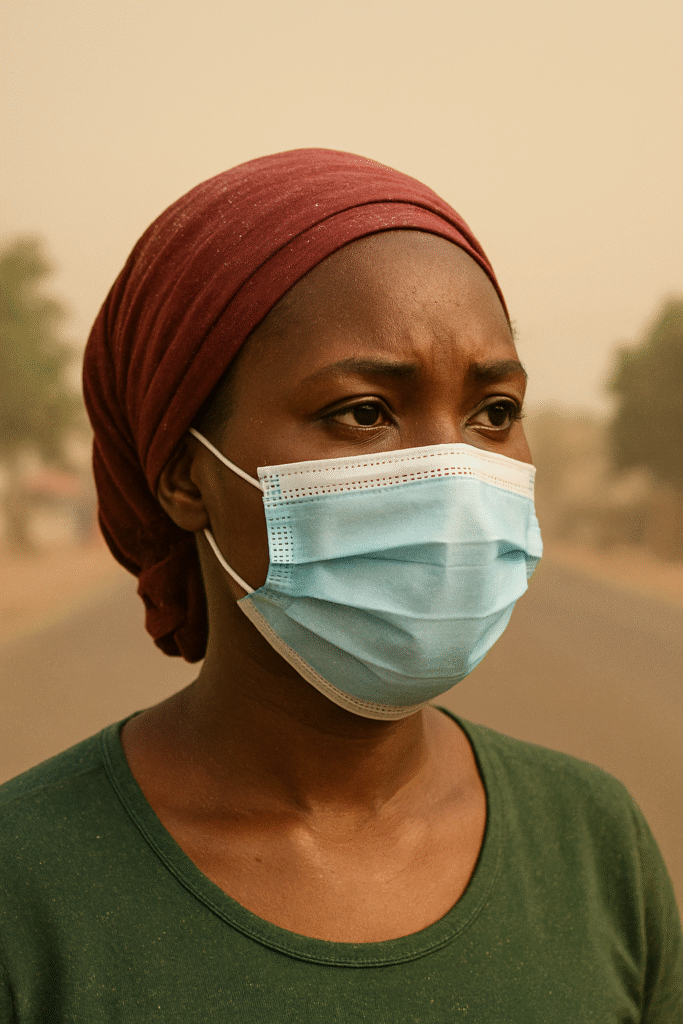
To protect against dust and dry particles
Harmattan winds carry lots of fine dust, sand particles, and pollutants from the Sahara. These particles can easily enter the nose and lungs, causing:
- Coughing and throat irritation
- Sneezing and nasal congestion
- Eye irritation
- Aggravation of asthma and respiratory issues
A mask helps filter the air you breathe, reducing direct inhalation of these harmful particles.
2. Prevent respiratory infections
The dry and dusty air makes the respiratory tract vulnerable. Common illnesses during harmattan include:
- Catarrh
- Bronchitis
- Asthma attacks
- Pneumonia
Wearing a mask keeps the air moist and cleaner, helping protect lungs and airways.
3. Keeps your nose and throat from drying out
Harmattan air is extremely dry, which can dry up the mucous membranes in the nose and throat. A face mask helps retain moisture, preventing:
- Sore throat
- Nosebleeds
- Cracked lips
4. Reduces spread of seasonal flu/cold
Harmattan period also coincides with peak cold and flu occurrences. Wearing a mask reduces the transmission of viruses, especially in crowded areas.
5. Protection for people with pre-existing conditions
Masks are very important for:
- Asthma patients
- People with allergies
- Those with weak immunity
- Outdoor workers (traffic wardens, bike riders, construction workers)
Best Type of Masks for Harmattan
| Mask Type | Effectiveness |
|---|---|
| N95 / KN95 | ★★★★★ (best) |
| Surgical mask | ★★★★☆ |
| Thick cotton mask | ★★★☆☆ |
| Light cloth mask | ★★☆☆☆ (use if nothing else) |
Tip: Wet the inner part of the mask lightly before wearing — it helps keep the air humid.
Additional Harmattan Protection Tips
- Drink lots of water
- Use lip balm or Vaseline
- Apply moisturizers on skin
- Use nose masks and sunglasses when outside
- Avoid staying long outdoors during peak dust hours (6am–10am)
Conclusion
Wearing a face mask during harmattan is not just for COVID-19 — it is a preventive health measure to protect your lungs, throat, nose, and overall wellbeing from dust, dryness, and infections.