
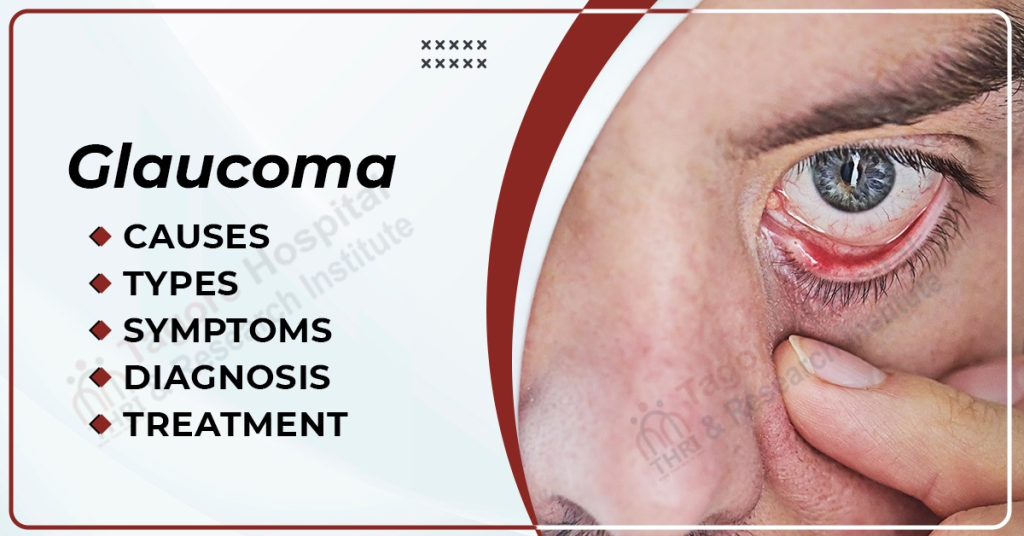
Glaucoma is mainly caused by damage to the optic nerve, usually due to increased pressure inside the eye. The major causes and risk factors include:
1. Increased Eye Pressure (Intraocular Pressure)
This is the most common cause. It happens when the fluid in the eye (aqueous humor) does not drain properly, leading to pressure buildup that damages the optic nerve.
2. Poor Drainage of Eye Fluid
- Blocked or narrow drainage angles
- Malfunction of the eye’s drainage system
This leads to fluid accumulation and rising eye pressure.
3. Family History (Genetics)
People with a family history of glaucoma have a much higher risk of developing it.
4. Age
- Risk increases after 40 years
- Very common in older adults
5. Medical Conditions
- Diabetes
- High blood pressure
- Heart disease
These conditions can reduce blood flow to the optic nerve.
6. Long-Term Use of Steroid Medications
Using steroid eye drops, tablets, or injections for a long time can increase eye pressure.
7. Eye Injury or Trauma
Previous eye injuries, surgeries, or severe infections can affect fluid drainage and lead to glaucoma.
8. Thin Cornea
People with a thin central cornea are at higher risk.
9. Severe Short-Sightedness or Long-Sightedness
High myopia or hyperopia can increase the risk, depending on the type of glaucoma.
10. Ethnic Background
People of African descent are at higher risk and tend to develop glaucoma earlier and more severely.